What Is Musical Echolalia?
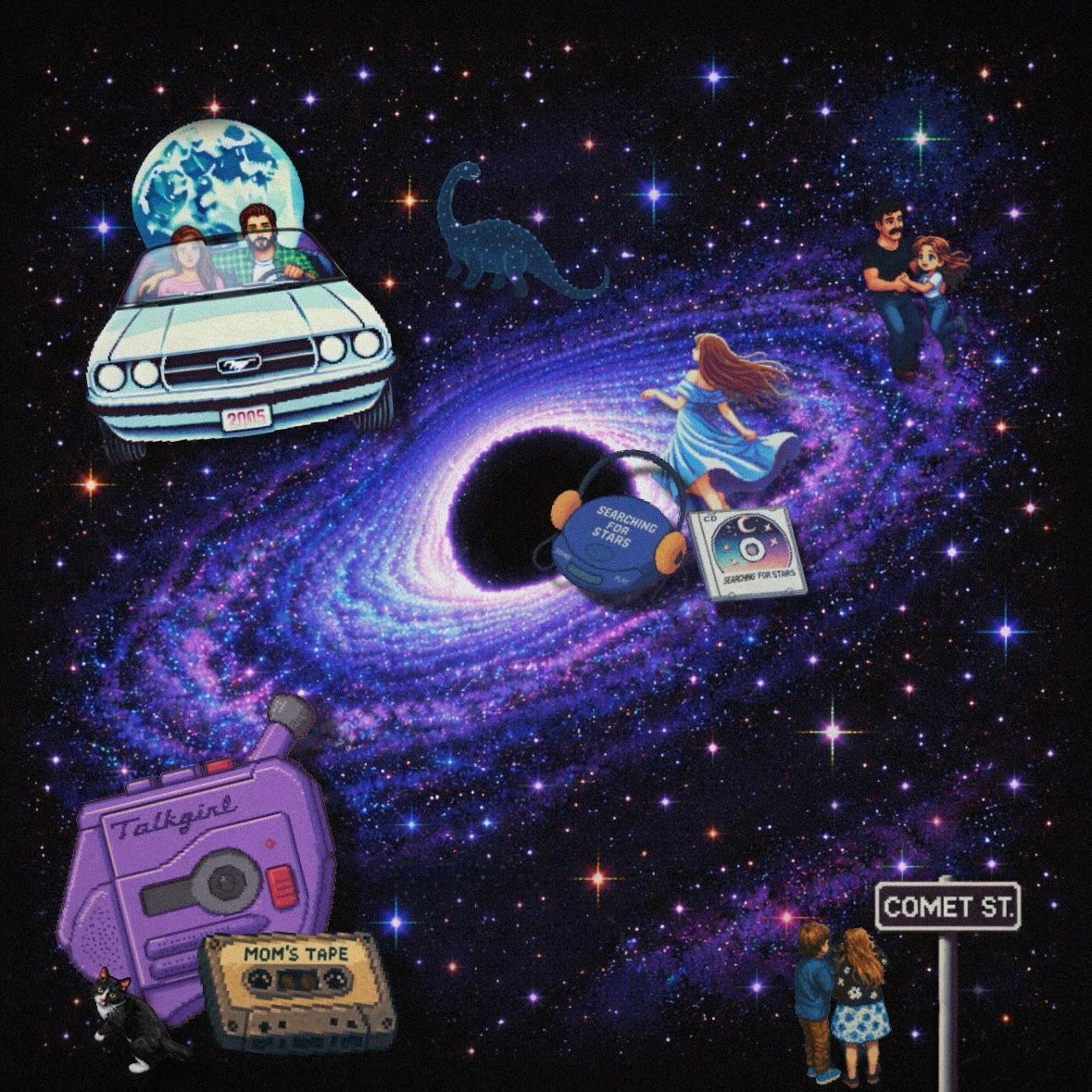
Searching for Stars & Musical Echolalia
The term Musical echolalia describes the way certain songs replay memories like a personal soundtrack.
Just as echolalia in language involves repeating sounds or phrases, musical echolalia happens when music repeats moments of our lives.
Most people experience this without realizing it has a name.
Musical Echolalia:
A phrase describing the way certain songs echo through memory, replaying moments from our lives long after the music first played.
A single song can unlock:
• childhood summers
• first friendships
• heartbreaks
• road trips or late-night drives
• family moments or a sense of closeness to those we have lost
• quiet turning points we didn’t understand at the time
When the song returns, the memory returns with it.
Music becomes a kind of time portal.
For me, this experience has always felt like an echo… the way certain songs carry pieces of the past inside them. The phrase musical echolalia is my way of describing those echoes: the moments when music repeats not just a melody, but a memory.
Why Music Triggers Memory So Powerfully
There’s a reason songs can do this.
Music activates the parts of the brain closely tied to emotion and memory. Because of this connection, the songs we hear during important life moments often become permanently linked to those experiences.
Years later, hearing the same music can instantly bring those moments back to the surface.
You’re not just remembering the song.
You’re remembering the version of yourself who first heard it.
Researchers studying music-evoked autobiographical memory have found that certain songs can act as powerful cues for recalling vivid personal experiences. Hearing a familiar piece of music can bring back specific moments from the past along with the emotions and atmosphere that surrounded them.
Neurologist Oliver Sacks wrote about this phenomenon in his book Musicophilia, describing how music can reach deeply into emotional and memory systems in the brain, sometimes unlocking memories long thought forgotten.
Neuroscientist Daniel Levitin has also explored why music has such a strong connection to identity and memory, explaining that music activates multiple brain systems at once: emotion, movement, and memory, which helps explain why songs often become tied to the moments in which we first experienced them.
A Soundtrack Hidden Inside Our Lives
Most of us don’t realize we’re building a soundtrack as we live.
But it happens naturally.
A song plays on the radio during a long car ride.
A band becomes the background music of a certain year.
A lyric lands at exactly the moment you needed it.
Without realizing it, we start attaching pieces of life to pieces of music.
Over time, those songs become memory anchors.
That’s musical echolalia at work.
From Musical Echolalia to Mixtape Memoir
Musical echolalia is the echo itself, the way a song returns with a memory still attached to it.
This mixtape memoir is built from those echoes.
For me, songs have become a way to process, organize, and understand memory. They act almost like emotional file folders, holding certain seasons of life, certain people, certain places, and certain versions of myself.
Searching for Stars takes that natural pattern and turns it into a storytelling structure: music becomes memory, memory becomes meaning, and the pieces begin to form a larger constellation.
Researchers studying involuntary musical imagery (the experience of songs replaying in the mind long after they have stopped playing) have shown that melodies and lyrics often linger in memory, repeating themselves almost like echoes.
Those echoes are part of what makes music such a powerful companion to memory.
The Idea Behind Searching for Stars
Searching for Stars is built around this idea.
Each story in the Searching for Stars Galaxy begins with a song, a film, or a cultural moment that carries memory inside it.
A song on the radio, a movie scene, a lyric that stayed longer than expected and from there the memory expands outward… the story unfolds.
Sometimes memory is joyful.
Sometimes it’s complicated.
Sometimes it reveals something about who we are without realizing it.
The music opens the door.
The song becomes the key that unlocks the moment.
The Constellation of Memory
If you explore the stories across Searching for Stars, you’ll see the same pattern appear again and again:
Music → Memory → Reflection.
Every piece is a fragment of a larger constellation.
Together they form a kind of memoir told through songs, nostalgia, and the echoes of moments that shaped a life.
Because in the end…
many of our most important memories don’t arrive alone.
They arrive with a soundtrack.
Further Reading on Music and Memory
For readers interested in the psychology and neuroscience behind how music connects to memory:
• Kelly Jakubowski — research on music-evoked autobiographical memory
• Oliver Sacks — Musicophilia: Tales of Music and the Brain
• Daniel Levitin — This Is Your Brain on Music
• Victoria Williamson — research on involuntary musical imagery
• ScienceDirect
—
Recent academic research on music-evoked autobiographical memory