Frequently Asked Questions
1. What is Searching for Stars?
Searching for Stars is a multimedia mixtape memoir written and imagined by me, Lauren Nixon-Matney. It’s part book, part mixtape, part constellation of memory: a place where music and memory echo together to explore identity across time.
Each story adds to a larger interconnected body of work, unfolding through songs, visual storytelling, and emotional resonance. Imagine getting to know a new friend through her mixtape of memories, each piece revealing another star in a constellation slowly taking shape, like sitting together in a fireside chat beneath the sky.
2. Is this a book, blog, art project, or something else?
So… what exactly IS Searching for Stars?
Let me break it down for you (the slightly long and technical way)…
Searching for Stars isn’t really a traditional linear book series.
It’s more like a constellation mixtape memoir, where every story is a star, every song is a portal, and every emotional memory connects into a larger map of identity, healing, family, nostalgia, grief, wonder, and survival through art and sound.
The Overall Plot / Core Narrative
At its heart, the series follows a girl growing into a woman while trying to understand:
⭐️who she is
⭐️where she came from
⭐️what shaped her emotionally
⭐️and how music, movies, memories, and imagination became the architecture of her inner world.
The “plot” is essentially the reconstruction of a life through echoes.
Not through dates or timelines.
Through:
⭐️songs
⭐️films
⭐️VHS memories
⭐️road trips
⭐️childhood bedrooms
⭐️rollerblades
⭐️heartbreaks
⭐️friendships
⭐️family mythology
⭐️strange symbols
⭐️old photographs
⭐️spiritual searching
⭐️grief
⭐️motherhood
⭐️nostalgia
⭐️and artistic awakening.
The recurring mechanism that drives the series is the idea of musical echolalia: 🎶
music replaying memory like an emotional time machine.
So structurally, the series behaves almost like:
⭐️a mixtape
⭐️a memory palace
⭐️an interactive scrapbook
⭐️and a nonlinear coming-of-age epic all fused together.
The “Main Character”
The obvious main character is a version of Lauren Nixon-Matney. (Me, hello there!)
But the deeper protagonist is arguably:
Memory itself.
Or even more specifically:
the transformation of memory into meaning.
The narrator begins as someone overwhelmed by feeling, nostalgia, trauma, beauty, sound, and emotional intensity.
Over time, the series becomes about learning how to:
⭐️organize those echoes
⭐️reinterpret them
⭐️survive them
⭐️and eventually transform them into light for other people.
That’s why the recurring motifs are:
⭐️galaxies
⭐️constellations
⭐️signals
⭐️static
⭐️echoes
⭐️portals
⭐️stars
⭐️tapes
⭐️and frequencies.
Everything is framed as transmission.
Character Development Arc
Phase 1 🌌 The Sensitive Observer
Early emotional energy across the project feels rooted in:
⭐️childhood wonder
⭐️loneliness
⭐️imagination
⭐️emotional hypersensitivity
⭐️and fascination with mystery, music, movies, and symbolism.
The narrator is absorbing everything:
songs on the radio, VHS tapes, parents, friendships, grief, weird cultural moments, late-night TV, underground music scenes.
This phase carries a strong:
⭐️90s girlhood
⭐️suburban mythology
⭐️kid staring at the stars trying to understand life energy.
⸻
Phase 2 🌌 Fragmentation & Emotional Turbulence
As the memories deepen, the emotional stakes grow.
Themes emerge involving:
⭐️divorce
⭐️instability
⭐️grief
⭐️identity confusion
⭐️growing up too fast
⭐️feeling emotionally displaced
⭐️searching for home
⭐️and trying to make meaning from painful transitions.
Music becomes survival architecture here.
Songs are no longer just entertainment.
They become:
⭐️anchors
⭐️emotional containers
⭐️portals
⭐️companions
⭐️and psychological landmarks.
This is where the series starts evolving beyond nostalgia and into something more existential.
⸻
Phase 3 🌌 Reconstruction Through Art
This is the phase the current site feels most centered in.
The narrator is no longer just remembering.
She’s building.
She begins:
⭐️mapping memory
⭐️connecting emotional patterns
⭐️reclaiming painful history
⭐️mythologizing ordinary life
⭐️and turning fragmented experiences into narrative constellations.
This is where the project transforms into:
a creative healing system.
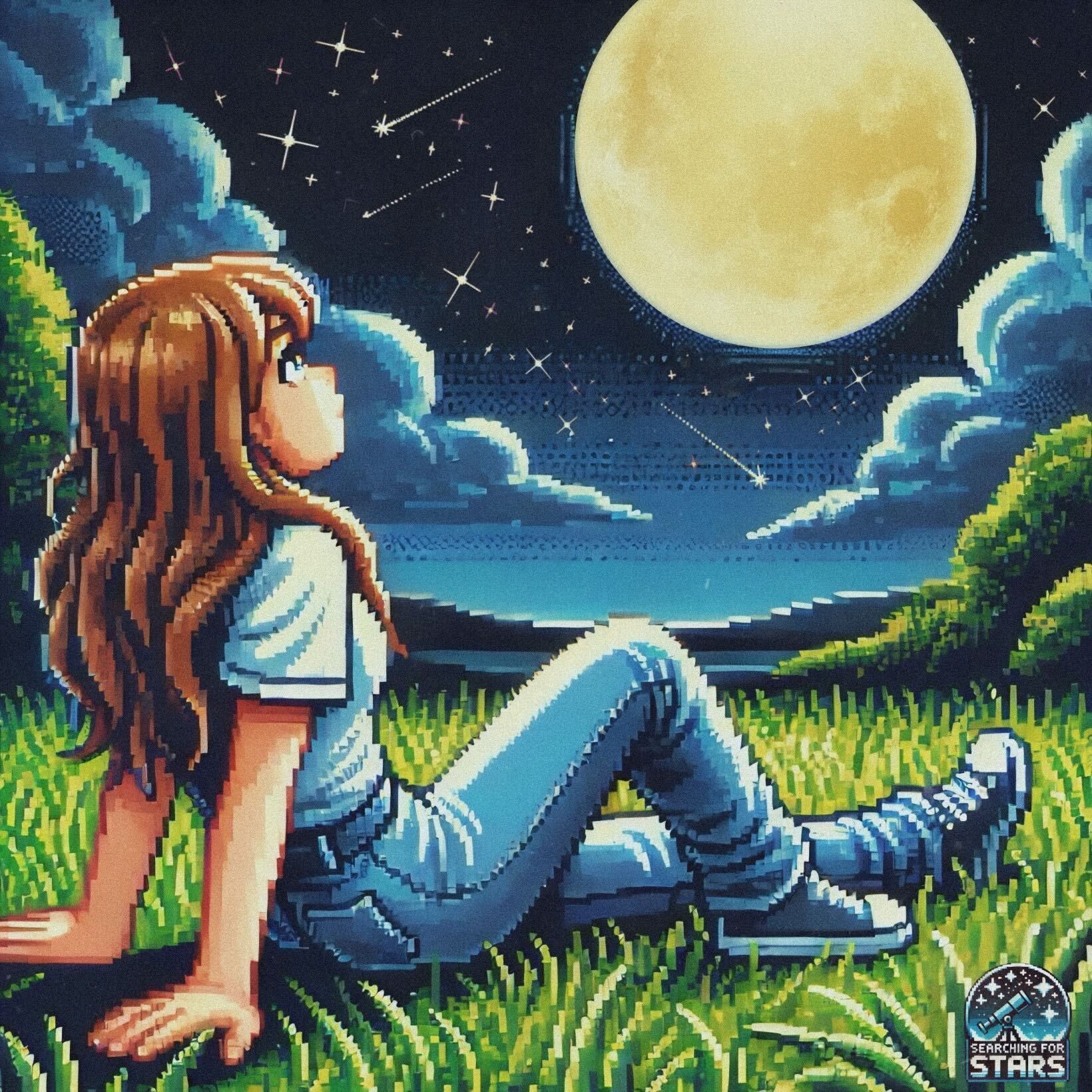
The pixel art aesthetic matters here because it symbolizes memory reconstruction itself:
fragmented pieces forming a complete emotional picture.
⸻
Phase 4 🌌 Legacy, Light, and Transmission
The later emotional direction of the project feels increasingly focused on:
⭐️motherhood
⭐️generational healing
⭐️gratitude
⭐️preserving stories
⭐️protecting wonder
⭐️and passing emotional wisdom forward.
The narrator evolves from:
“the girl searching for stars”
into:
“the woman leaving constellations behind for others.”
That’s a very important shift.
The project stops being purely introspective and becomes communal.
The “Letters of Light” section especially reveals this evolution:
gratitude, honoring people, preserving emotional impact, documenting goodness before it disappears.
Thematic Synopsis
If I had to summarize the entire saga in one cohesive synopsis:
Searching for Stars is a nonlinear multimedia memoir about a deeply imaginative girl who grows into a woman by tracing her life through the songs, films, memories, and emotional echoes that shaped her identity. Guided by the concept of musical echolalia, she reconstructs her personal history like a constellation — transforming nostalgia, grief, love, family mythology, pop culture, and sound into an interconnected galaxy of stories about healing, meaning, wonder, and survival through art.
Genre-Wise, It Feels Like a Fusion Of:
⭐️memoir
⭐️experimental autobiography
⭐️multimedia literature
⭐️nostalgic Americana
⭐️music journalism
⭐️emotional anthropology
⭐️pixel-art mythmaking
⭐️VHS-era magical realism
⭐️and interactive coming-of-age fiction
Even though it’s nonfiction-rooted, it reads emotionally like mythic fiction. 🎶📓🔭
Welcome to the Edge of the Echoes.
3. What does “musical echolalia” mean?
Echolalia is when words or sounds repeat, like echoes that return without being invited. Musical echolalia is how songs and lyrics loop in memory, shaping how we feel, remember, and even communicate. It’s the heartbeat of this project.
I don’t remember events chronologically as much as I remember them scored, sequenced, emotionally indexed, and replayed like personal soundtracks, often with sensory rich music video like recreations of the moment!
In this project, music acts as the thread that connects memory, and vivid imagery is what gives those memories dimension. One provides the pattern; the other provides the depth. Woven together, they turn recollection into re-experience.
Because I also experience high sensory mental imagery (sometimes referred to as hyperphantasia), songs often reactivate memories in immersive detail, including environment, texture, and emotional tone. When a song plays, it doesn’t just remind me of a moment; it often reconstructs it.
Searching for Stars explores that intersection: how music becomes memory, and how memory becomes identity.
4. What is a mixtape memoir?
A mixtape memoir is a life story told through songs, memories, and the emotional echoes that connect them.
Searching for Stars is not arranged in strict chronological order. It moves more like memory itself, through association, resonance, and the songs that keep returning at different points in life.
In this project, music becomes a filing system for memory. A song can hold a childhood summer, a friendship, a heartbreak, a family story, a movie scene, or a version of yourself you thought you had forgotten.
That is the heart of the mixtape memoir: each piece stands on its own, but together they form a larger constellation of sound, memory, and meaning.
5. Who is this project for?
For readers. For music lovers. Nostalgia chasers. For kids of the 80s, 90s, and 2000s and for anyone who’s ever pressed rewind on a memory. It’s for seekers of light in the dark, and for those who feel music deep within their soul.
It’s for the little girl inside me who dreamed of being a writer, who thought in music video formation and remembered in lyrics long before she had words to explain it. It’s for anyone who carries loops of sound and story in their mind and is still searching for ways to make sense of them. It’s for my children (the living record of my life and the love story their father and I have built) so they will always know who I was, and how they inspired me to finally share my voice.
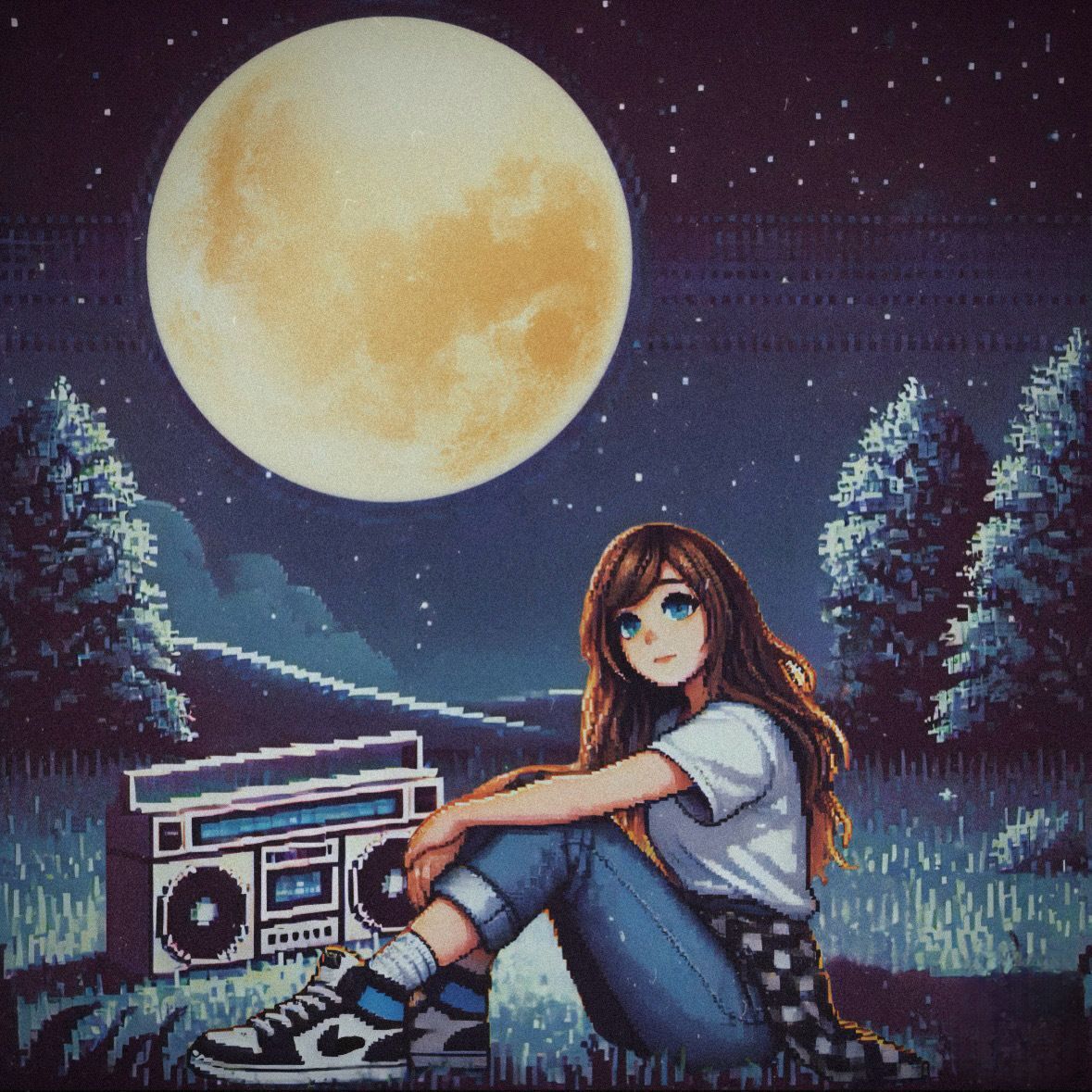
6. Why pixel art?
The pixel art style was inspired by our kids love of old-school Nintendo and Sega games, a love my husband and I were proud to pass on to them. Because memory itself often feels pixelated like fragments, pieces, little glowing squares that come together into something whole. Vivid sensory filled memories, retro games, mixed CDs, VHS tapes and the texture of nostalgia.
I actually start with real photos from my own life or family albums and then run them through a mix of tools I pay for and use regularly. I will usually recreate the image in a pixelated or retro game style based on the specific theme I’m going for. From there I save and reuse an image several times… I crop, layer, remove backgrounds, add shadows or filters and remix things until it feels customized and right for each memories chapter.
My husband and I also run a digital marketing company, so when I hit a wall, he jumps in and helps finesse the edits or teach me the tools needed for the job.
At its core, the project is about the stories, the music, and the way memory like melody loops inside us. The visual art helps bring it to life... like a pixelated scrapbook!
7. Can I listen as well as read?
Yes. The site weaves together audio narration, Spotify soundtracks, and pixel art to create a layered experience. Each story has its own soundtrack and audiobook recording, so you can hear the memory as you read it.
You can listen to individual pieces as they’re uploaded to Spotify, explore the full Searching for Stars soundtrack, or follow along through curated playlists connected to each memory. Throughout the site, you’ll also find reference links woven in like hidden constellations, anchoring subtle light across the project.
8. Where should I start?
Anywhere. That’s the beauty. The project is a constellation, and you can enter from any star (memory/story). Like getting to know a new friend it never happens in order, it comes in bursts, like shooting stars revealing their story one streak at a time.
Certain images throughout the site are clickable, leading you to other pieces that share similar characters, themes, memory vibes or synced timelines... like doorways, small bridges between stories that hum with the same rhythm. Click if you’d like to drift from one suggested memory to the next, but it’s never required to light your way.
9. What inspired Searching for Stars?
Searching for Stars was born from a lifelong obsession with music, memory, storytelling, and the strange emotional way certain songs seem to carry entire chapters of our lives inside them.
Long before this became a website, a multimedia memoir, or a constellation of interconnected stories, it existed in fragments.
In notebooks.
In journals.
In late-night thoughts scribbled down during high school more than twenty years ago.
I was always writing.
Stories.
Poems.
Lyrics.
Memories.
Little observations about people, songs, movies, grief, beauty, and the strange feeling that music somehow preserved emotions differently than ordinary memory did.
Even back then, I was trying to understand why certain songs didn’t just remind me of moments… they re-created environments. Entire emotional atmospheres. Almost like memory becoming architectural.
Over time, the idea quietly evolved into what would eventually become Searching for Stars:
a nonlinear mixtape memoir built around music, emotional echoes, visual storytelling, nostalgia, identity, and the concept of musical echolalia.
But like a lot of lifelong creative dreams, it stayed tucked away for years while life unfolded around it.
Adulthood.
Loss.
Love.
Marriage.
Motherhood.
Survival.
Growth.
The stories kept accumulating.
The constellation kept expanding.
And somewhere underneath it all, the dream of becoming a writer never fully disappeared.
Then something beautiful happened.
My children encouraged me to finally stop talking about writing a book someday and actually do it.
What started as a simple New Year’s resolution slowly became this entire universe.
Searching for Stars is the result of carrying memories, music, imagination, grief, wonder, and storytelling across decades, then finally deciding to build something from all the echoes.
At its core, this project is both deeply personal and deeply communal.
It’s my constellation.
But it’s also an invitation for others to trace their own.
10. Is this project autobiographical?
Yes. Searching for Stars is rooted in my life and told through the songs, films, and memory loops that shaped me. The stories are personal, but the way music reconnects us to who we were is something many of us recognize.
Music doesn’t belong to one life alone. The songs that shaped me are the same songs that shaped entire rooms, friendships, seasons, and generations. While the details are mine, the emotional landscape is shared. The music that carried me has carried countless others, too.
The constellations are personal, but the sky is universal.
11. How can I support the project?
Read, listen, share. Tell a friend who loves music (or someone who seems to process in vibrational frequencies)! Post your favorite pieces or just press play. Every echo helps keep the sky bright and the stars aligned.
When you share a story or a song, you extend the thread that connects memory to memory. Each listen strengthens the constellation this project is built on: music, story, and shared experience woven together.
EXPLORE THE GALAXY:
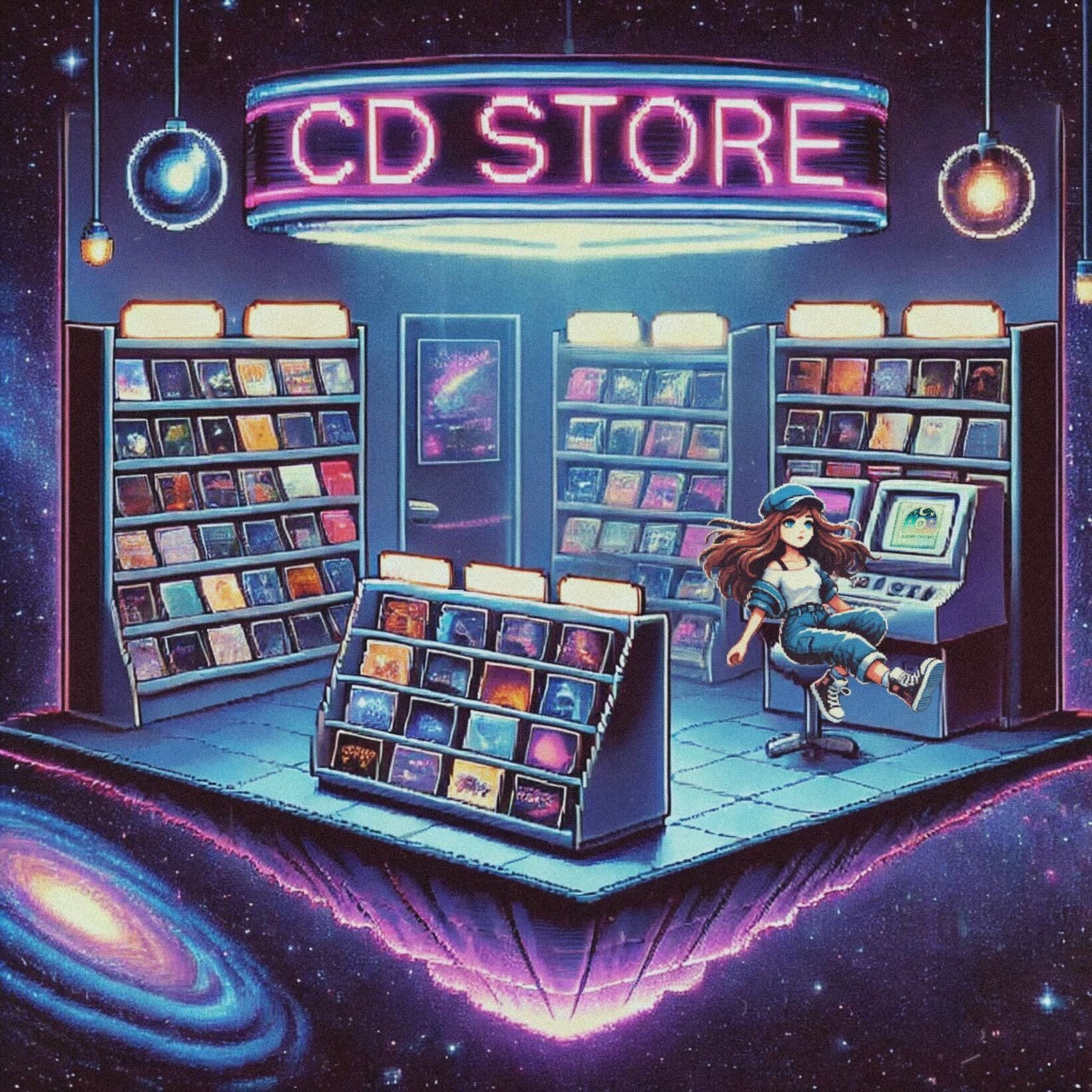
The Cosmic Sound Shop
Stories sparked by songs & the memories music carries throughout time.
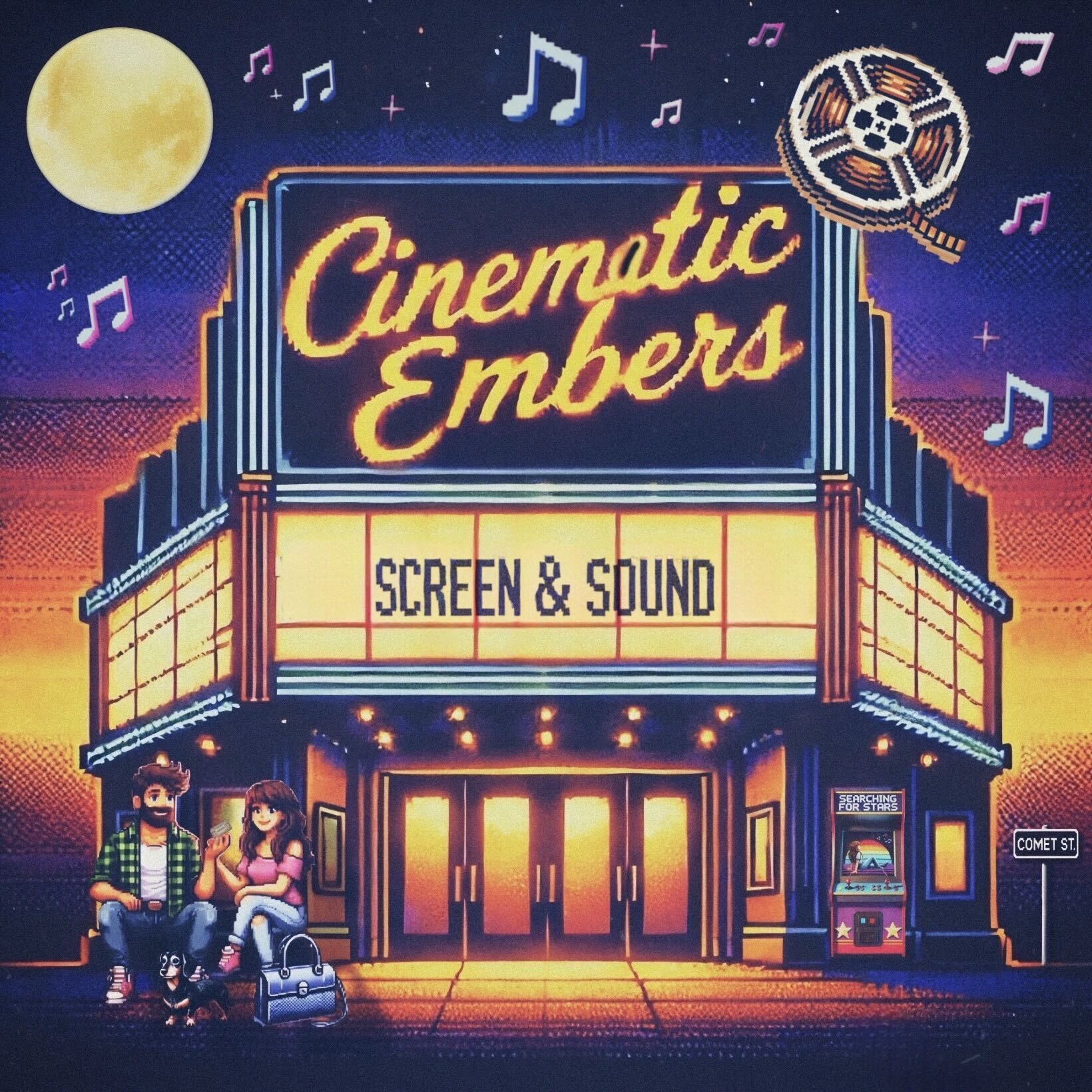
Cinematic Embers
Moments ignited by films and the characters that embed into our memory.
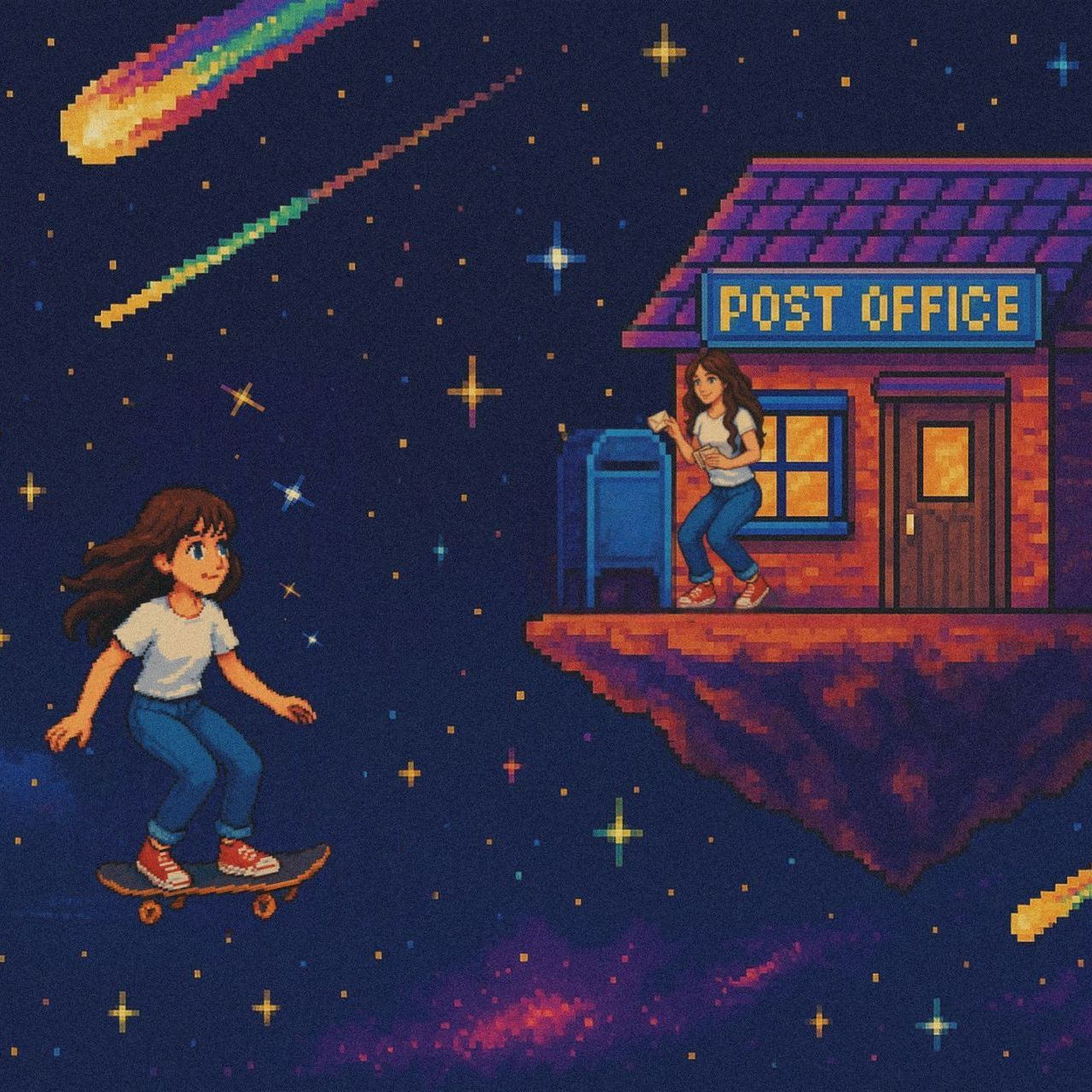
The Cosmic Post Office
Letters of gratitude, reflection, and light sent into the universe.
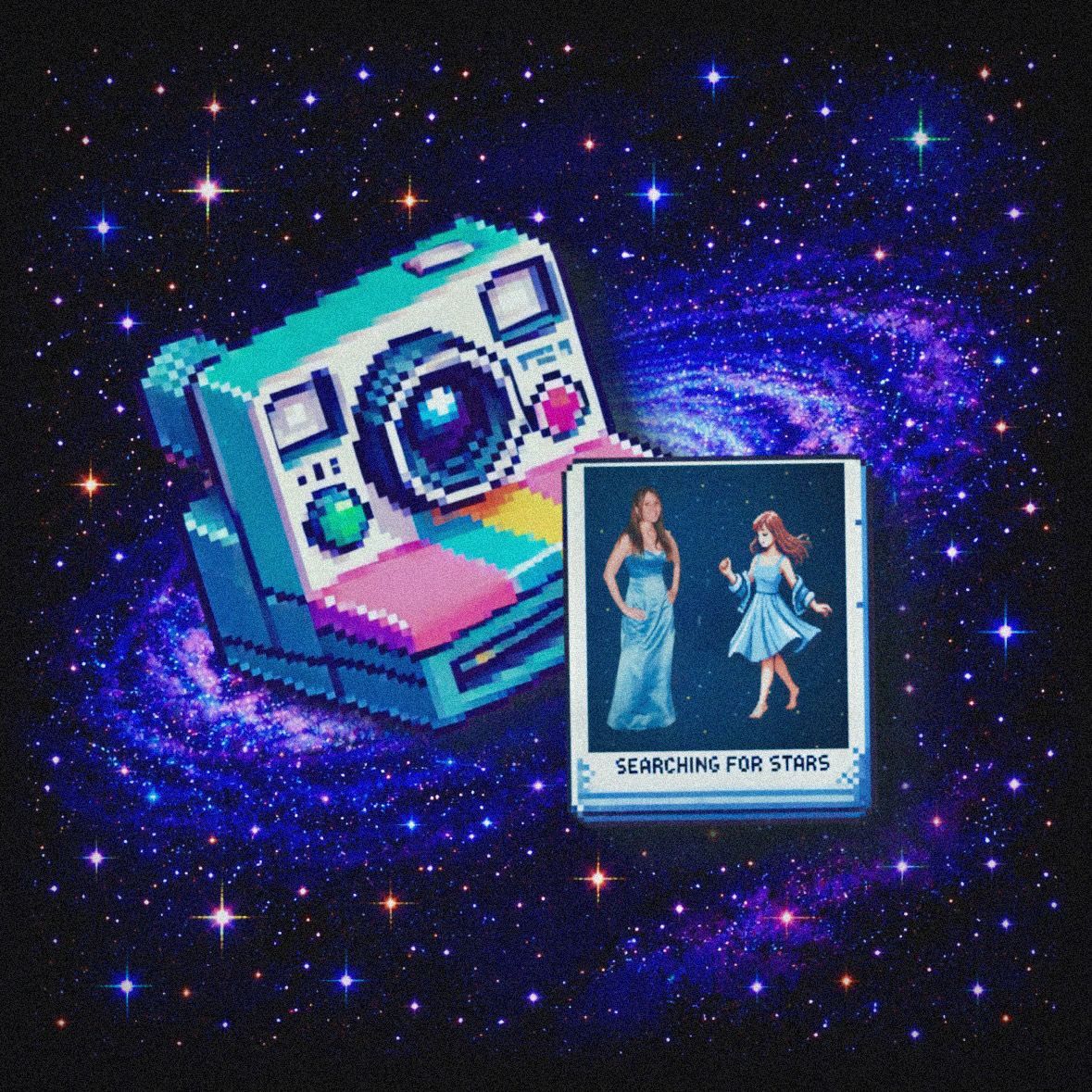
Scrapbook!
Pixelated photograph nostalgia. Live action/animation hybrid fragments of memory.